Most people assume that landscaping is simply about making things look nice. Plant some flowers, lay some sod, add a few decorative stones, and call it done. But landscaping in Saskatoon operates by a completely different set of rules, and ignoring those rules can cost you time, money, and a yard full of dead plants.
The Saskatchewan prairie is not forgiving. With extreme temperature swings, harsh winters, dry summers, and soil that challenges even experienced gardeners, getting your outdoor space right requires more than good taste. It requires knowledge specific to this region.
This analysis is designed for beginners who want to do things properly from the start. By the time you finish reading, you will understand what makes landscaping Saskatoon properties uniquely challenging, which plants and materials actually thrive in this climate, and how to build an outdoor space that survives and looks great year after year. No guesswork, no wasted effort. Just a clear, honest breakdown of what the prairie actually demands from your landscape and how to meet those demands with confidence.
Why does landscaping in Saskatoon require a different approach?
Saskatoon is zone 3a. Most landscaping guides you find online, in print, or at a national home improvement retailer are written for zones 5 to 7. That covers southern Ontario, coastal British Columbia, and the milder parts of the Prairies. Those guides give advice on plant selection, base depths, and footing specifications that simply do not transfer here. A shrub labelled "hardy" at a big-box store may survive three winters in Winnipeg and die in its first in Saskatoon. Base depth recommendations for a patio or walkway written for a zone 6 climate will leave you with a surface that shifts within two seasons. The zone difference is not a minor detail to adjust for; it is the starting point for every decision on a Saskatoon property.
The soil compounds the problem. Saskatoon's urban neighbourhoods, including Stonebridge, Evergreen, and Lakewood, sit on heavy clay. Clay compacts under construction traffic, holds water rather than draining it, and expands and contracts as moisture and temperature change. A patio base that performs reliably in sandy soil will settle unevenly on clay. Lawn grading that works at Regina Beach will pool water in a Stonebridge backyard if the grading angles and material depths are not recalculated for clay conditions. University of Saskatchewan research on Saskatoon's swales and drainage corridors confirms that water movement through clay-dominant urban soils behaves differently than in other prairie environments; residential drainage follows the same principle at a smaller scale.
The freeze-thaw cycle makes everything structural harder. Frost penetrates to 1.5 to 2.0 metres in a typical Saskatoon winter. That kind of frost depth heaves paving stone, cracks concrete, shifts fence posts, and lifts deck footings set to southern Canadian specs. Every below-grade component on this soil needs to be built to Saskatoon's frost depth, not to a national average.
Then there is the calendar. The frost-free window runs from late May to mid-September, roughly 16 weeks. That is the entire outdoor construction and planting season. A project that starts late or runs behind has no buffer. Sod laid after late July struggles to establish before freeze-up. Concrete and paving work must cure before the ground turns. Scheduling is tighter here than in almost any other major Canadian city.
Finally, the city receives approximately 357 mm of rain per year, and much of it arrives as intense summer storms rather than steady, distributed rainfall. A 40 to 50 mm event in an afternoon hits clay soil that has almost no absorption capacity. Water goes sideways, not down. That makes drainage the first design question for any Saskatoon yard, not a finishing consideration. Grading direction, swale placement, and French drain routing need to be resolved before a planting plan or paving layout is drawn. Ask any contractor you are considering to explain specifically how they handle drainage on clay; the answer tells you quickly whether they understand what Saskatoon's soil actually does.
What construction work do we do?
Excavation and Grading
Start here. If your yard pools water after rain, nothing else you build on top of it will perform the way it should. Saskatoon's heavy clay holds water instead of draining it, and that water sits against foundations, under slabs, and in low spots until it either evaporates or freezes. Grading reshapes the ground so water moves away from the house toward property lines, rear alleys, or drainage corridors. Site grading in Saskatoon uses laser-grade technology to maintain consistent slopes, even on relatively flat lots, and incorporates swales to move water without pushing it onto neighbouring properties. This is not a cosmetic service. It is the base condition for every other construction project listed below.
The sequence matters as much as the slope. Cutting grade, opening drainage trenches, and hauling off the spoil all belong at the front of a project, before a patio base or a footing goes in over ground that still has to be reshaped. That ordering is not a prairie quirk — an excavation contractor in Belvidere, New Jersey gives homeowners the same advice about grading and drainage for the same reason: earthwork done after the hardscape is finished costs several times what it would have cost first.
Paving Stone Patios and Walkways
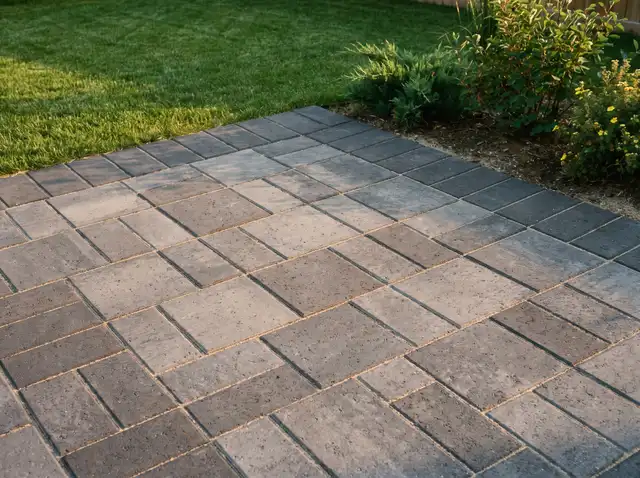
Saskatoon's frost penetrates roughly 1.2 to 1.8 m into the ground each winter. A paving stone base sized for a warmer province, typically 100 to 150 mm of compacted granular, will shift and crack here. We build to prairie frost-depth specs, compacting the granular base in lifts and setting edge restraints designed to hold through the freeze-thaw cycle. The result is a patio or walkway that stays level after several winters, not just the first one.
Retaining Walls
Clay is denser and more expansive than sandy or loam soils. When it gets wet, it pushes harder against whatever is holding it back. A retaining wall in Saskatoon needs a deeper base, adequate drainage aggregate behind the wall face, and perforated pipe at the footing to relieve hydrostatic pressure. Skip any of those steps and the wall moves. We size the base and drainage layer to the height and soil load of each specific wall.
Decks and Fences on Screw Piles
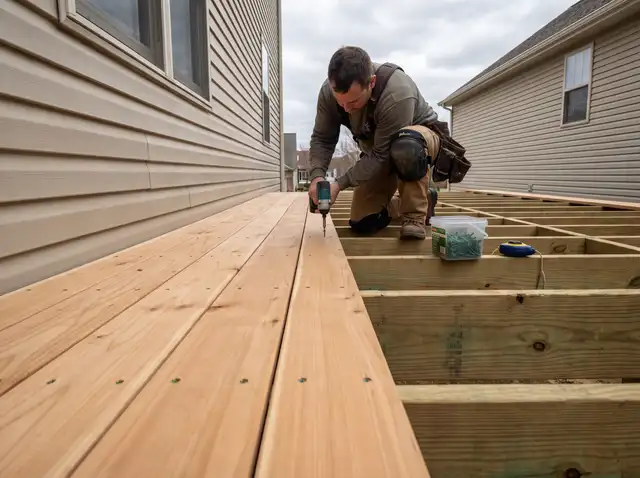
Standard poured concrete footings in frost-susceptible ground heave. Screw piles are driven past the frost-affected zone into stable soil below, which is why they are the preferred footing for decks and fences on the prairies. The pile is installed in a single day, there is no concrete cure time, and the structure sits on bearing soil that does not move seasonally. Fence posts set in shallow concrete in Saskatoon clay are a common callback. Screw piles are not.
Other Construction Services
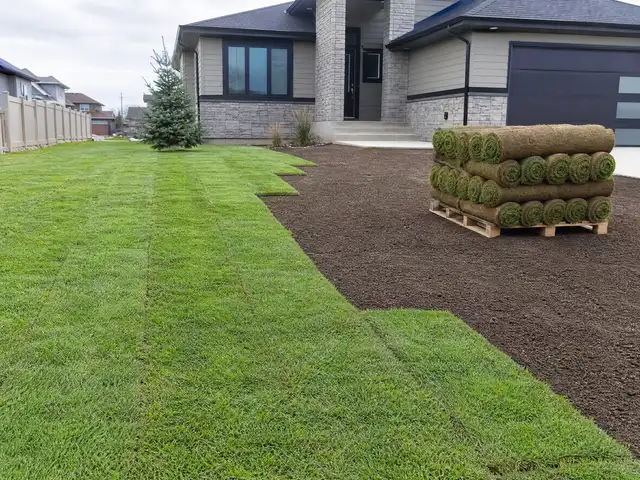
Irrigation and sprinkler systems, landscape design, sod installation, and artificial turf are each covered in detail on their own dedicated pages. Follow the relevant link for specs, timing, and what to ask before committing to any of those projects. Call (639) 638-8899 to discuss which construction services your yard needs first.
Do you handle maintenance and snow removal too?
Yes. Maintenance is a core part of what we do, not a side offering.
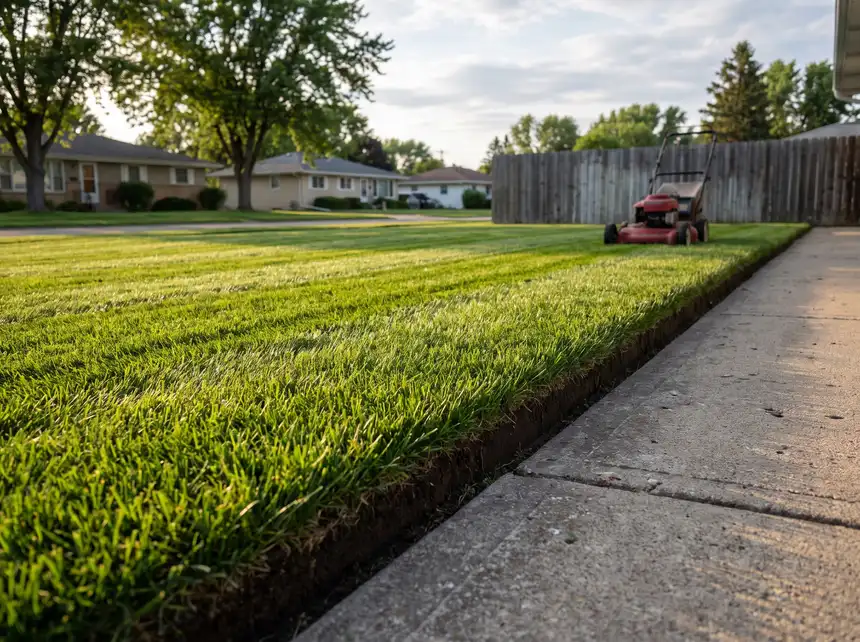
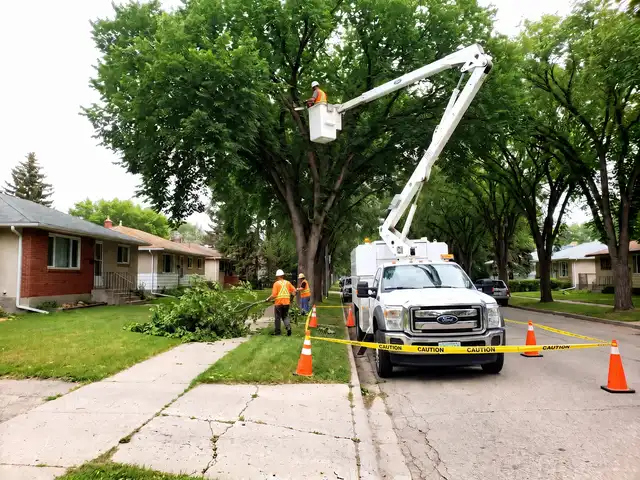
The maintenance side covers weekly lawn care, weed control and fertilizing, lawn aeration, tree trimming and removal, and spring and fall yard cleanup. Each of those services has prairie-specific timing that matters on Saskatoon clay. Aeration timing, fertilizer scheduling, and dormant pruning windows before bud break all shift when you are working in zone 3a with a frost-free period that runs late May to mid-September. Each service has its own dedicated page in the services section with method, timing, and what to watch for on heavy prairie soil.
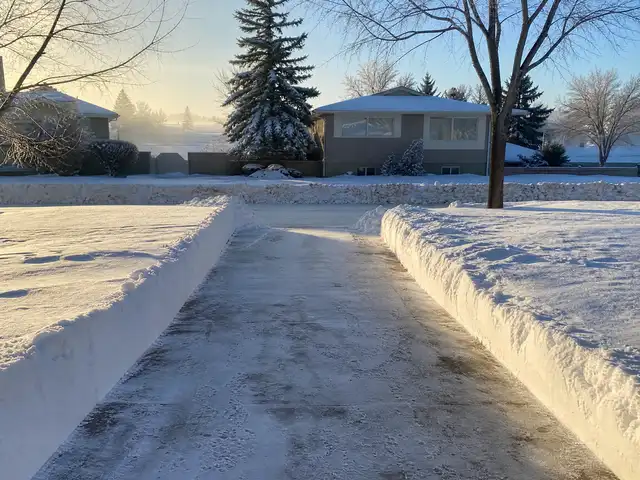
Snow removal is not a minor add-on. Saskatoon averages 91 cm of snow a year, and the season runs from roughly mid-October through March, roughly five to six months. That is a substantial operational commitment, and we treat it as one. Year-round contractors that include snow removal keep the same crew on a property across seasons, which matters when that crew installed your sod, knows where the irrigation heads are, and can avoid damaging edging with a plow blade.
Bundling summer and winter service with one contractor means one call, one account, and no gaps between seasons. The combined window runs close to ten months of the year. For acreage owners and small commercial property managers, that continuity cuts the coordination overhead of tracking separate contractors, separate billing, and separate service agreements across overlapping seasons.
Call (639) 638-8899, Monday to Saturday, 7 am to 7 pm, to talk through a maintenance or snow removal arrangement.
Where do you work?
Saskatoon is the primary service area. That covers the full city: established neighbourhoods like Lakeview, Varsity View, and Arbor Creek, as well as the newer subdivisions in Stonebridge, Willowgrove, Silverspring, and Evergreen. The south-end and northwest-edge developments are included too. Newer yards in those areas often come with rough grade only, compacted builder clay, and no topsoil worth mentioning. Older neighbourhoods bring their own issues: mature tree roots, settled soil, and drainage patterns that have been working against the yard for decades.
Beyond city limits, the service area includes Warman, Martensville, Osler, Dalmeny, Clavet, Delisle, Vanscoy, Aberdeen, Langham, and the RM of Corman Park. Demand in the Warman and Martensville corridor is real and active; residents in those communities actively seek out landscaping help the same way Saskatoon homeowners do.
Acreage owners in Corman Park face the same heavy clay and deep frost conditions as any city lot, sometimes worse. There is no municipal storm infrastructure to catch the overflow. Grading, swales, and drainage tile have to do the full job on their own. Corman Park acreage properties sit right on the same clay belt that runs under the city.
Not sure if your address is in the service area? Call (639) 638-8899. The answer takes 30 seconds.
How does the quoting and scoping process work?
Quotes are done on-site. Every time. Saskatoon's clay soil, variable slope, and buried obstacles mean the cost of a project lives underground, not on a price list. A contractor who quotes over the phone without seeing the yard is guessing. That guess may be missing the cost of dealing with poor drainage, a buried concrete slab, or a slope that requires additional excavation and material. None of that is visible without a physical visit.
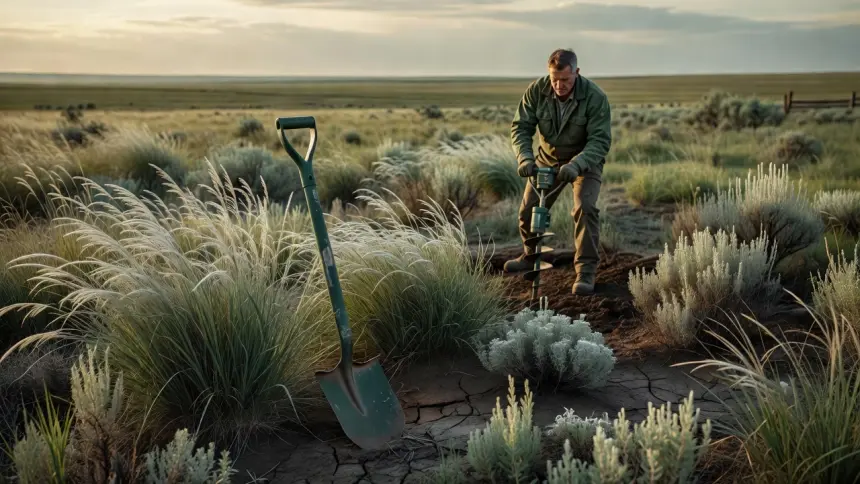
Before any digging starts, utility locates are arranged through the City of Saskatoon's underground line locate service. This is not optional and it is not an add-on charge. It is a mandatory step that identifies gas lines, electrical conduits, and water and sewer infrastructure before a shovel enters the ground. SaskEnergy publishes specific guidance on this process for landscaping projects because utility strikes during yard work happen often enough to warrant it. A reputable contractor handles this as a standard pre-work step.
A written scope goes to the customer before any work begins. That scope specifies the build depths: base thickness under paving stone, footing depth for decks and fences. In Saskatoon's freeze-thaw climate, these numbers matter. A paving stone base built to 150 mm behaves differently from one built to 300 mm when spring heave hits. The written scope makes those specs visible and comparable. Per the Landscaping Quotes Guide, the cheapest bid most often cuts corners on base depth, not on materials you can see.
Landscaping crews in the Detroit area design to a shallower frost line than ours — roughly 1.1 m against the 1.2 to 1.8 m above — and still put the base depth in writing for the same reason. The number changes with the market; committing to one on paper does not. Ask what frost depth a quote is designed to, and what drainage goes in behind a wall or under a base. A contractor who cannot answer is not designing to a number, and the bid that looks cheapest is usually the one that skipped it.
Cost is driven by four things: earthwork volume, material selection, site access, and what the soil reveals. Ranges can be discussed during the site visit. The on-site visit is free. Call (639) 638-8899, Monday to Saturday, 7am to 7pm, to book it.
When is the right time to get in touch?
March is the right time to call, even though the ground is still frozen and nothing can be built yet. The build season in Saskatoon runs roughly 16 weeks, from late May to mid-September. That schedule fills from the front. Contractors who hear from you in March can book you into an early slot; contractors who hear from you in June are often working around commitments made months earlier.
Construction typically starts in late May. That is when the ground has thawed and dried enough to excavate and grade without compacting the clay further or trapping moisture under a new base. Starting work on saturated soil causes problems that show up later, in settled paving stone or uneven grading. Waiting for proper conditions is not optional; it is how the work holds up through the freeze-thaw cycles that follow every Saskatoon winter.
Snow removal has a separate deadline. Mid-October is the practical cutoff for getting on a route. Properties and service windows are confirmed before the first significant snowfall, not after. Calling in November, once snow is already falling, usually means the routes are full.
Spring and fall cleanups, aeration, and fertilizing each have their own timing windows tied to soil temperature and growth cycles. Those details are covered on the individual service pages rather than here.
If a project is already in mind for this season, the earlier the on-site quote happens, the more scheduling options remain open. Call (639) 638-8899, Monday through Saturday, 7am to 7pm.
What to do next
If your yard pools after rain, your lawn is more weed than grass, or you want a patio, deck, or fence built to last a Saskatoon winter, the next step is a free on-site quote.
Come prepared. Bring a photo of where water pools and how long it sits. Bring a rough sketch or measurements of the patio or deck area. If it is a fence, have your property boundary line on hand. The more specific the problem, the more useful the visit.
Call (639) 638-8899, Monday through Saturday, 7 am to 7 pm. The quote is free. The visit is on-site. A written scope, including the depths and methods we are building to, goes in front of you before any work begins.
Conclusion
Landscaping in Saskatoon is not a generic project you can figure out on the fly. The prairie climate demands intentional plant selection, soil preparation suited to local conditions, and materials that can withstand brutal freeze-thaw cycles. Shortcuts rarely survive the first winter.
The core takeaways are straightforward: choose native or climate-adapted plants, respect the soil before you plant anything, design with drainage in mind, and think long-term rather than just season-to-season.
You now have a foundation that most Saskatoon homeowners never get. Use it. Start with one section of your yard, apply these principles, and build from there. Small, informed decisions compound into an outdoor space that genuinely thrives year after year.
The prairie is demanding, but it rewards those who work with it rather than against it. Your yard can be one of them.
Frequently Asked Questions
Want someone to look at your yard?
Tell us what you need and where the property is. We come out, look at the ground, and give you a written scope and price — no charge and no obligation.
- Free on-site quotes across Saskatoon
- Prairie-hardy plantings that survive zone 3a winters
- Utility locates arranged before any digging
- Summer yard work and winter snow from one contractor
- Written scope before a shovel goes in the ground