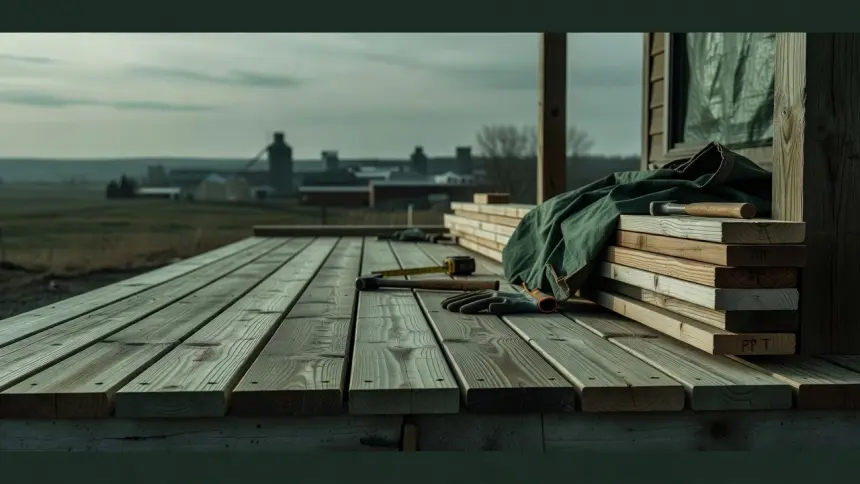
Building a deck in Saskatoon comes with unique challenges that most online guides simply overlook. Harsh prairie winters, freeze-thaw cycles, and extreme temperature swings put enormous stress on outdoor structures, making your material choice critically important from the very start.
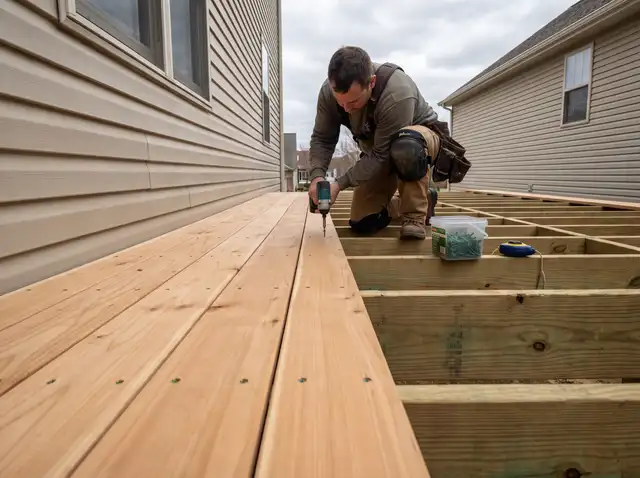
If you are planning a new outdoor build, pressure treated wood decking is likely the most practical and cost-effective option available to you. This material is engineered specifically to resist moisture, rot, insect damage, and the kind of structural degradation that Saskatoon's climate accelerates over time. However, working with it correctly requires understanding some fundamental concepts before you ever pick up a saw or drive a single fastener.
In this tutorial, you will learn what pressure treated lumber actually is and how the treatment process works, which grades and retention levels are appropriate for ground contact versus above-ground applications, how to account for seasonal wood movement during installation, and what safety precautions apply when cutting or handling treated material. By the end, you will have a solid technical foundation to plan and execute a deck build that is built to last through everything a Saskatchewan season can deliver.
What is pressure-treated wood and why does it still dominate decking?
Pressure treatment is an industrial process, not a surface coating. Boards go into a sealed cylindrical tank. Air is pulled out of the wood fibres under vacuum, then a copper-based preservative solution is forced in under hydraulic pressure. The chemicals penetrate deep into the fibre structure, which means protection that does not flake, peel, or wear off the surface over time. The result is wood that resists moisture, fungal rot, and insect attack from the inside out.
That process explains why pressure-treated lumber holds roughly 52% of the global wooden decking market and more than 70% of residential decks across North America, even as composite products grow. Three factors keep it the default choice: it is stocked at every lumber yard, it cuts and fastens with standard tools, and its per-board cost stays well below composite alternatives.
A properly built pressure-treated deck lasts 20 to 40 years. When decks fail early, the cause is almost always corroded fasteners, inadequate footings, or skipped maintenance, not the lumber itself.
The grade stamp on each board matters. It tells you the preservative retention level and the approved application. "Above ground" rated boards are not rated for posts set in soil or concrete. Using the wrong grade is one of the most common specification errors on residential decks.
Saskatoon lumber yards carry pressure-treated stock year-round. The build window is a different matter: roughly late May to mid-September. That four-month window affects which pressure-treated wood product you should specify, particularly around moisture content at time of installation, covered in the next section.
What changed after 2003 — and why do your fasteners matter more than you think?
Until 2003, most residential pressure-treated lumber used Chromated Copper Arsenate (CCA) as the preservative. CCA was phased out for residential applications starting in 2004 due to arsenic exposure concerns. The replacements, Micronized Copper Azole (MCA), Alkaline Copper Quaternary (ACQ), and Copper Azole (CA), do the same rot-and-insect protection job. But they behave differently when they contact metal.
The copper content in modern preservatives is more aggressive toward metal than CCA was. Standard zinc-plated or electroplated fasteners corrode prematurely in contact with ACQ or MCA lumber. New pressure-treated boards also arrive wet, often around 30% moisture content, which accelerates galvanic corrosion at every metal contact point. The fastener starts degrading before the deck is a year old.
The fix is specific: hot-dip galvanized or stainless-steel fasteners throughout. Not just the decking screws. Every joist hanger, post cap, post base, beam bolt, and structural connector in the assembly needs to be rated for ACQ or MCA contact. One incompatible connector in a critical location creates a structural weak point even if every other fastener is correct.
This is one of the most common shortcuts on budget deck builds. The wood holds up. The fasteners fail first, and the structure loosens.
When you review quotes, ask these two questions directly: what fastener specification are you using, and are all metal connectors, including hangers and post hardware, rated for ACQ or MCA contact? A contractor who cannot answer specifically is worth pushing. This breakdown of how modern PT lumber behaves differently is a useful reference before that conversation.
Above-ground vs. ground-contact rating: the detail most homeowners miss
Not all pressure-treated lumber is treated to the same preservative retention level. The stamp on the end of each board tells you what the board is rated for. Above-ground and ground-contact boards look identical on the shelf. The only way to tell them apart is to read the end-tag.
The distinction matters because the application determines the required rating. Posts, joists sitting close to grade, and any member embedded in soil or concrete need ground-contact rated lumber. In Canadian practice, that means UC4A or UC4B. Above-ground-only boards carry a lower preservative retention level; put them in a ground-contact position and they will degrade faster than untreated wood in the same spot, because the treatment chemistry was never formulated to hold up under sustained moisture exposure.
Saskatoon makes this more consequential than it would be in a milder climate. Footings here go 1.8 to 2.1 m into heavy clay. Clay holds moisture for weeks after snowmelt. In Garrison, Lakeview, or any neighbourhood with a shallow water table, posts are sitting in saturated ground from April through May every single year. An above-ground-rated post in that position is not just a substandard choice; it is the wrong material for the condition.
A secondary nuance worth knowing: ground-contact lumber used as surface decking boards, where it never touches soil, can actually split and check more aggressively as it dries, because the higher chemical retention affects how the wood behaves during moisture cycling. Matching the rating to the specific application is the correct approach; defaulting to ground-contact across every piece on the project is not.
Before any post or footing material goes into the ground, ask to see the end-tag stamp. A contractor who knows what they are doing will show you without being asked. If they cannot identify the retention level on the lumber they are installing, that is useful information. This breakdown from Santelli Lumber on pressure-treated grades and uses is a readable starting point for understanding what those stamps mean before you speak with a supplier.
KDAT vs. wet-treated lumber: why the choice matters in a four-month season
Standard pressure-treated boards leave the treatment tank saturated. Moisture content can sit at 50% to 80% or higher when the lumber arrives at the yard. As those fibres dry unevenly over the following weeks and months, boards warp, bow, cup, and twist. That movement does not stop after the first dry cycle. Every rain event and every spring thaw reopens it, working screws progressively loose and widening gaps between boards.
Kiln-Dried After Treatment (KDAT) lumber solves this at the source. After chemical treatment, the boards go into an industrial kiln where controlled heat and even airflow pull moisture back down to 12–19%. The preservative protection is identical to standard treated stock. The difference is dimensional stability. KDAT boards arrive at the job site closer to their final dry dimension, so they move far less after fastening. They are also lighter and easier to handle on site.
The staining and sealing problem is where Saskatoon's four-month build window makes the choice concrete. Wet-treated boards can require 8 to 12 months of drying time before a stain or sealer will penetrate properly. A deck built in June with wet-treated boards will not be ready to finish before the first hard freeze arrives in late September. It goes into its first Saskatoon winter unprotected. KDAT boards can be stained immediately after installation, which matters when your finishing window is already short.
The cost premium is real. KDAT typically runs 10 to 20% more per board than standard wet-treated stock. On a typical deck, that difference is marginal against the labour cost of callbacks, re-fastening lifted screws, or refinishing boards that were never properly sealed before freeze-up. Most professional builders in cold-climate markets now specify KDAT for the surface decking boards specifically for this reason. Ask any contractor you interview whether they are pricing wet-treated or KDAT; the answer tells you something about how they think about long-term performance in a prairie climate.
Saskatoon's frost line sits at 1.8–2.1 m — what does that mean for your deck footings?
Saskatoon's frost penetrates 1.8–2.1 m into the ground every winter. Soil water expands roughly 9% when it freezes. Any footing that sits above that depth will be pushed upward, a process called frost heave. Over three to five winters, that movement tilts posts, cracks ledger connections where the deck attaches to the house, and racks the entire frame. The damage is cumulative and often invisible until something fails visibly.
Most generic decking articles online cite frost depths of 0.9–1.2 m. Those numbers reflect milder climates, Pennsylvania or Iowa levels of cold. They do not apply in Saskatchewan. For comparison, North Dakota has the deepest average frost penetration in the continental United States at roughly 1.5 m. Saskatoon exceeds that. If a contractor quotes you a footing depth in the 0.9–1.2 m range, ask them directly why, in writing, before any work starts. The Saskatchewan-specific comparison of helical piles and concrete footings illustrates why frost performance is treated as the primary design criterion here, not an afterthought.
Local code governs the required footing depth, footing diameter, and minimum concrete strength. The City of Saskatoon and the relevant rural municipality each set their own minimums. Those local minimums take priority over any national model code or out-of-province standard. Confirm the current published requirement with the authority having jurisdiction before excavation begins.
A building permit requires footing drawings and triggers an inspection. That inspection is the only third-party checkpoint that confirms the footing actually reached the required depth. Without a permit, there is no documented record. That gap creates problems at resale and can affect insurance claims.
Before signing any deck contract, ask the contractor to state the footing depth in writing. Landscaping Saskatoon Pros puts a written scope in front of every customer before a shovel goes in the ground. That document includes the depth being built to. It is a basic accountability measure, and any contractor unwilling to provide it is worth questioning. Call (639) 638-8899 to arrange a free on-site quote with a written scope included.
How does Saskatoon's clay soil make frost heave worse?
Saskatoon sits on lacustrine clay, the compacted sediment left behind by a glacial lake. That clay holds water. It does not drain the way sandy or gravelly soil does. When the freeze cycle starts in October and November, the soil around your deck footings is still saturated. Water expands roughly 9% when it freezes, and in clay, there is a lot of it to expand.
Reaching the correct footing depth matters, but depth alone does not protect you here. In a well-draining sandy soil, water percolates away from the footing shaft before temperatures drop hard. In Saskatoon clay, that water stays. It adheres to the sides of the footing as it freezes and pulls upward through a mechanism called adfreeze, or skin friction. The footing can heave even when the base is sitting well below the frost line.
Clay also shifts laterally under repeated freeze-thaw loading. That means posts can lean or rack without the footing base rising at all. The horizontal pressure clay exerts on a footing shaft is not something most general decking guides cover, but it is a real factor in areas like Wildwood, Lawson Heights, or any Saskatoon neighbourhood built on flat, poorly draining ground. A belled or widened footing base increases passive resistance and helps counter this.
Water pooling near the post base compounds both problems. Slow-draining clay lots in Saskatoon hold snowmelt and spring rain close to the structure for days. That moisture feeds the next freeze cycle and keeps the wood wet between seasons, which accelerates rot even in ground-contact rated lumber.
Grading the yard away from the deck is not a finishing touch. It is a drainage decision that directly affects how your footings perform over time. A minimum fall of roughly 25 mm per 300 mm (1 inch per foot) for the first 1.5 to 2 metres away from the structure reduces the moisture loading on the soil at footing depth. Ask any contractor quoting your deck whether grading around the structure is part of the scope.
Mature trees close to the deck footprint belong in the same conversation. Roots draw moisture out of clay unevenly, which changes how the ground around a footing behaves through a freeze-thaw cycle, and a tree that has to come down is far cheaper to deal with before the footings go in than after the deck is framed over it. Crews doing Tree Removal in San Bruno give homeowners the same sequencing advice for the same reason: take the tree out first, then build.
Are screw piles a better footing option than poured concrete in Saskatoon?
Yes, in Saskatoon's conditions, screw piles are often the stronger choice.
A screw pile is a steel shaft with a helical plate welded near the bottom. A machine drives it into the ground until the plate reaches load-bearing soil well below the frost line. The shaft does not sit in the frost-affected zone; it passes through it entirely. That means the freeze-thaw cycle that wrecks shallow footings in Oleskiw or Evergreen has nothing to grip. The pile does not move.
Concrete footings can work when poured to the correct depth, 1.8 to 2.1 m in Saskatoon, but they require excavation, forming, pouring, and cure time. Standard concrete takes up to 28 days to reach full strength. Most contractors wait at least a week before loading. In a build season that runs from late May to mid-September, that waiting period is a real cost in calendar weeks.
Screw piles eliminate that wait. Installation is completed in hours. Framing can start the same day. There is also no excavation. Driving a screw pile into clay does not produce the large spoil volumes that a 1.8 m dug footing hole does, which matters when you are working in a finished backyard in Lakeview or Stonebridge.
Load capacity is confirmed during installation by monitoring the drive torque. When resistance reaches the target value, the plate is in competent soil. That is a verifiable number, not an assumption.
Helical pile performance in Saskatchewan clay is covered in detail here if you want to read further on how the two methods compare in prairie conditions.
Landscaping Saskatoon Pros installs screw piles and can quote both footing methods. If frost heave has shifted a previous deck or fence on your property, bring that up when you book the on-site estimate. Call (639) 638-8899 to arrange it. The screw piles service page covers how the installation process works in more detail.
Do you need a building permit for a deck in Saskatoon?
Yes. For most decks in Saskatoon, a building permit is required from the City of Saskatoon before construction begins.
The threshold is specific: any deck higher than 200 mm above grade, any deck exceeding 2.32 sq. m and sitting more than 600 mm above grade, or any stair with more than three risers triggers the permit requirement. Most attached or elevated decks clear at least one of those thresholds. Building without a permit when one is required creates real problems. At resale, an unpermitted structure shows up as a liability. Mortgage lenders and home insurers increasingly require proof that a deck was built under permit and passed inspection before approving financing or coverage. Saskatchewan real estate disclosure obligations make this harder to bury.
The permit is not paperwork for its own sake. The City of Saskatoon's deck project guide requires submitted drawings that show footing depths, post and beam sizing, joist spans, ledger connections and flashing, guardrail height (minimum 914 mm), and baluster spacing. Those requirements are the minimum structural standards the city enforces under the 2020 National Codes. Inspections happen at key construction stages, not just at the end.
Skipping the permit does not avoid the problem; it defers it. A stop-work order, a mandatory tear-down, or a required retrofit on a finished deck is not unusual. Retroactive compliance almost always costs more than pulling the permit first.
Landscaping Saskatoon Pros manages the permit process on behalf of homeowners. The drawings, submission, and inspection coordination are handled by the contractor. The homeowner does not need to navigate the city's process alone.
One important jurisdictional note: if your property is in Warman, Martensville, or the RM of Corman Park, the permit authority is not the City of Saskatoon. Confirm which authority has jurisdiction for your specific address before any work starts. Call (639) 638-8899 to sort that out before the build season begins.
How long does pressure-treated decking last in Saskatchewan's climate?
A correctly built pressure-treated deck in Saskatchewan can last 20 to 40 years or more. That range assumes four things were done right at construction: correct retention ratings in the right positions, compatible fasteners, footings below the frost line, and finish applied only after the wood has properly dried. Most decks that fail at 10 or 12 years can be traced back to at least one of those four points. The build decisions made on day one determine the ceiling.
Maintenance determines how close you get to that ceiling. Inspect fasteners every spring; copper-based preservatives are corrosive, and screws that showed no sign of rust at install can begin corroding within a few seasons. Check post bases and ledger connections after each freeze-thaw cycle for movement or gap formation. Re-seal the decking surface every 2 to 3 years, or sooner if the water-bead test fails. The test is straightforward: sprinkle a small amount of water on the surface. If it beads up, the wood is either still holding treatment moisture or the previous sealer is still intact. If it absorbs immediately, the surface is ready for a new coat. Applying sealer to boards that still bead will cause the finish to peel within one season, wasting both the product and the labour.
The first post-build inspection should happen in the spring following construction, once the deck has gone through its first full freeze-thaw cycle. Saskatoon's clay soil moves. Minor fastener backing-out or a small gap at a ledger connection is a 20-minute fix in year one. Left for three or four seasons, that same movement becomes a structural repair. Catching it early is the whole point.
Spring and fall yard cleanup visits are a practical time to run through a basic deck check. When Landscaping Saskatoon Pros is on a property in Sutherland, Stonebridge, or out in Warman for a cleanup, a quick look at post bases, fasteners, and surface condition takes a few minutes. If something looks off, it gets flagged before it becomes a larger problem. Reach us at (639) 638-8899.
What to ask before you commit to a deck build
Before you sign anything, get four specific answers in writing.
Footing depth. Ask the contractor to state the exact footing depth in the written scope. "Below frost" is not an answer. In Saskatoon, below frost means below 1.8 to 2.1 m. A contractor who cannot give you a number is guessing.
Retention rating and fasteners. Ask which retention level they are specifying for posts and any ground-contact framing. Then ask whether the screws, bolts, and joist hangers are rated for ACQ or MCA lumber. The answer should be hot-dip galvanised or stainless steel. Standard hardware corrodes prematurely against modern copper-based preservatives.
KDAT or wet-treated, and who pulls the permit. Ask whether the decking surface will be wet-treated or KDAT boards. Wet-treated boards warp as they dry; KDAT boards arrive more stable. Also confirm in writing that the permit application to the City of Saskatoon is included in the project scope, not left to you.
Screw piles. If other structures on your property have shifted from frost heave, ask whether screw piles are an option for your site instead of poured concrete footings.
Landscaping Saskatoon Pros quotes free and on-site, puts a written scope in front of you before work starts, and manages the City of Saskatoon permit process. Call (639) 638-8899, Monday to Saturday, 7am to 7pm, or visit landscapingsaskatoonpros.com to book an estimate.
Conclusion
Building a deck in Saskatoon is an investment that demands the right materials, the right knowledge, and the right approach from the start. Pressure treated wood gives you a durable, rot-resistant foundation, but only when you select the correct retention level, allow for seasonal movement, and follow safe handling practices throughout the build.
Keep these key points front of mind: match your lumber grade to the application, always use compatible hardware and fasteners, let fresh lumber acclimate before installation, and never skip the protective finishing steps on cut ends.
You now have the foundation to move forward with confidence. Pull your permits, source quality materials from a reputable local supplier, and build something that will last through decades of prairie winters. Your future self, relaxing on a solid and beautiful deck, will thank you for getting it right.
Frequently Asked Questions
Want someone to look at your yard?
Tell us what you need and where the property is. We come out, look at the ground, and give you a written scope and price — no charge and no obligation.
- Free on-site quotes across Saskatoon
- Prairie-hardy plantings that survive zone 3a winters
- Utility locates arranged before any digging
- Summer yard work and winter snow from one contractor
- Written scope before a shovel goes in the ground