May through October
Excavation, Grading & Earthworks in Saskatoon
Yard grading, earthworks and drainage correction that moves water away from your foundation.
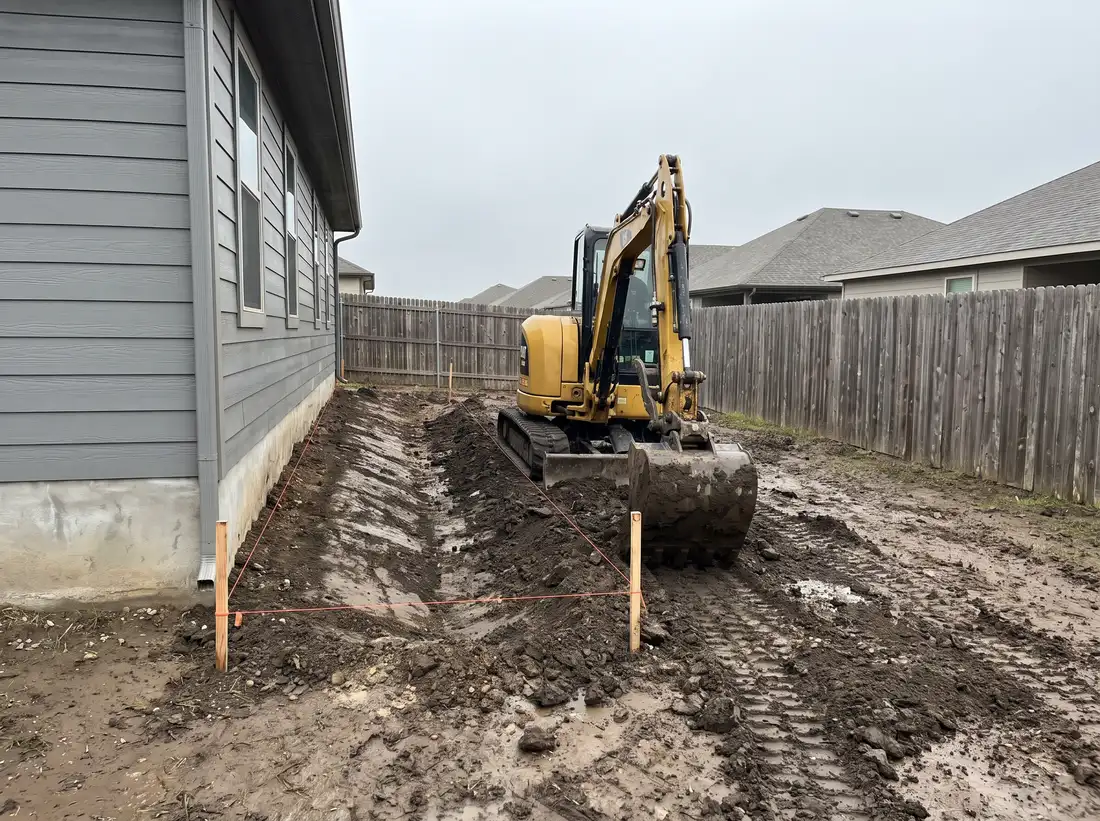
We provide excavation, yard grading, and drainage correction for residential properties in Saskatoon and the surrounding communities, including new-build lots that were never finished properly and older yards where decades of settling have turned the grade back toward the house. On heavy Saskatoon clay water does not soak away, so where the ground slopes is what decides where the water goes. Homeowners call us about standing water, wet basements, and yards they cannot use in spring.
What Does Regrading a Saskatoon Yard Involve?
Grading work starts with establishing where water currently goes and where it needs to go instead. That means looking at the fall away from the foundation, the low points that collect, where downspouts discharge, and where the property line and the neighbours sit — because water cannot simply be moved onto someone else's lot.
The physical work is cutting material from high areas, filling low ones, and shaping a consistent fall away from the house. On a Saskatoon lot this usually also means importing topsoil, since the existing material is often clay subsoil that will not grow anything. Where a simple slope is not enough we build a swale — a shallow shaped channel that carries water to a discharge point.
Compaction is deliberate rather than incidental. Fill placed in a low spot and left loose will settle over a winter and the low spot returns, which is why "we filled it in" jobs so often need redoing.
What Are the Signs a Saskatoon Yard Needs Regrading?
Standing water is the obvious one. If part of your Saskatoon yard holds water for days after rain, or holds meltwater for weeks in April, the ground there is lower than everything around it and nothing drains it. On clay that water is not going anywhere on its own.
Water against the foundation is the serious one. If the ground beside your house is flat or slopes toward it, every rainfall and every melt is directing water at the basement wall. This is the most common cause of a wet Saskatoon basement that is otherwise structurally fine, and it is the reason to prioritize grading over almost any other yard work.
Other signs point the same way: a lawn with soft, permanently soggy areas, a patio or walk that has water sitting on it after rain, ice sheets forming in the same spot every winter, and — on new builds in Saskatoon, Warman, and Martensville — a rough builder grade that was never finished at all.
Why Do Saskatoon Yards End Up With Bad Grade?
New construction is the largest single source. A builder grades a lot to shed water off the building envelope and to pass an inspection, not to produce a finished yard, and the rough grade that gets handed over is frequently a few inches out at the edges. On new lots in Saskatoon and Warman this is the normal starting condition rather than a defect.
Settling is the second, and it is why older neighbourhoods have the problem too. Backfill placed around a foundation when the house was built continues to settle for years, so a lot that graded away from the house in 1985 may slope gently toward it now. Nobody notices until a wet spring.
The third is clay itself. Saskatoon's heavy clay has very low infiltration — water that lands on it largely stays on the surface and moves by gravity or not at all. In sandier soil a minor low spot drains away and nobody ever sees it; here the same low spot is a puddle for a week. The margin for error in grading is simply smaller.
What Affects the Cost of Grading and Excavation in Saskatoon?
Volume of material moved is the primary driver, and it works in both directions — material hauled off the site and material trucked in are each priced by volume, and a job needing both costs on both sides. Trucking and disposal are real costs that scale with how far the grade has to change.
Access determines the equipment and therefore the speed. A yard a machine can reach is efficient work; a fenced back yard with only a narrow gate may need a compact machine or hand work, which can multiply the labour on an otherwise simple job.
Where the water is going to go is sometimes the expensive part. A lot with an obvious discharge point is straightforward. A lot surrounded by neighbours at the same or higher elevation may need a swale, a dry well, or a more involved solution, because water cannot legally be pushed onto adjacent property.
Whether topsoil and sod are being restored afterwards is a substantial add. Regrading destroys the existing lawn in the worked area by definition, so the finished cost usually includes putting turf back.
Do I Need Regrading, Drainage, or a Sump Pump?
Regrading is the first thing to look at whenever water is sitting on the surface or running toward the house, because it is the root cause in most Saskatoon yards and fixing it removes the water before it becomes anyone else's problem. Surface water is a grading problem until proven otherwise.
A drainage system — a swale, a French drain, or a catch basin tied to a discharge — is what you add when regrading alone cannot get the water out, typically on flat lots with nowhere obvious for it to go. It is more expensive than grading and it is a complement to it, not a substitute.
A sump pump addresses water that has already reached the foundation from below, which is a different problem from surface water. If your basement is wet and the yard slopes toward the house, fix the grade first — a sump pump managing water that correct grading would have kept away from the building is treating the symptom at ongoing cost.
What Does "Earthworks" Cover on a Residential Property?
Earthworks is the trade term for any work that moves or reshapes ground, and on a Saskatoon residential property it covers the same jobs described above under a different word: cutting and filling to establish a grade, stripping and stockpiling topsoil before a build, shaping swales, excavating for a patio base or a retaining wall, and hauling spoil away or bringing material in.
It also covers the site preparation that happens before anything else exists — levelling a pad for a garage or a shed, cutting in a driveway approach, and opening trenches for services. On a new lot in Saskatoon or Warman this is generally the first work done and the work everything afterwards depends on.
The reason it is worth naming separately is that people search for it separately. If you have been quoted for "earthworks" and are not sure whether that is the same thing as the grading described on this page, it is — and the questions to ask are the same: how much material is moving, where is it going, and where will the water end up when the job is finished.
Where Does This Fit With the Rest of the Yard?
Excavation, Grading & Earthworks is rarely the only thing a property needs, and the order the work happens in matters more on Saskatoon clay than most people expect. Ground comes first: if water is pooling or running toward the house, grading and drainage is the job to do before anything you can see. Buried services like irrigation go in before surfaces, and sod goes down after the hard landscaping rather than before it.
The jobs most often quoted alongside this one are retaining walls, sod installation and paving stones & patios. Doing them in one visit is usually cheaper than bringing equipment back, because the mobilisation and the machine access are paid for once.
If you are planning the whole property rather than one job, start with a landscape design so the phases are sequenced before anything is built. Otherwise, the full service list covers everything we do, the cost guides explain what drives each price here, and the how-to guides are written for Saskatchewan timing rather than the milder-climate advice most search results give you. We work across Saskatoon and the surrounding area, including Warman, and every quote is free and given on site.
Get a free excavation, grading & earthworks quote
Tell us what you need and where the property is. We come out, look at the ground, and give you a written scope and price — no charge and no obligation.
- Free on-site quotes across Saskatoon
- Prairie-hardy plantings that survive zone 3a winters
- Utility locates arranged before any digging
- Summer yard work and winter snow from one contractor
- Written scope before a shovel goes in the ground
Frequently Asked Questions
How much slope does a yard need to drain properly?
The ground needs a consistent fall away from the foundation for the first stretch out from the house, and then somewhere for that water to go. The exact figure is set by municipal grading requirements, but the principle is that a flat yard on Saskatoon clay does not drain — flat is not good enough here, it needs actual fall.
Why does water sit in my yard for weeks in the spring?
Because Saskatoon clay does not absorb it and the spot is lower than everything around it. Snowmelt arrives faster than the ground can take it — the ground may still be partly frozen — so it pools in the lowest area and stays until it evaporates. That is a grading problem, not a soil-amendment problem.
Can I just fill in the low spot with topsoil?
It usually comes back. Loose fill dropped into a low spot settles over a winter, and if the surrounding grade still directs water there, you have moved the problem by a season rather than fixed it. Correcting the fall across the whole area and compacting the fill is what makes it permanent.
Will regrading fix my wet basement?
Very often, yes — if the water is getting in because the yard directs it at the foundation, which is the most common cause in Saskatoon on an otherwise sound house. It will not fix a structural crack or a failed weeping tile. Grading is the cheapest thing to rule out first, and it is the right starting point.
Do I need a permit to change the grade of my yard?
Possibly. Municipalities regulate lot grading because altering drainage affects neighbouring properties, and significant grade changes can require approval. Redirecting water onto a neighbour's lot creates a genuine liability regardless of permits. We check the requirements for your property before we start moving ground.
When can grading work be done in Saskatoon?
From roughly May, once the frost is out and the ground has dried enough to work, through October. Wet clay is the practical constraint rather than the calendar — clay too wet to compact cannot be graded properly, so a soggy spring delays everyone.
Will you have to remove my lawn to regrade?
In the area being regraded, yes — you cannot reshape ground without disturbing what is on top of it. That is why grading quotes usually include restoring topsoil and sod afterwards, and why it makes sense to combine regrading with any other yard work you were planning.
How long does yard grading take?
A straightforward residential regrade is typically a few days including restoration, depending on how much material has to move and whether a machine can reach the work. Jobs that need imported topsoil or a drainage system take longer.
What is a swale?
A shallow, gently shaped channel that collects surface water and carries it to a discharge point. It is grassed over and, done well, reads as a natural dip in the lawn rather than a ditch. Swales are the standard solution on flat Saskatoon lots where there is no natural fall to work with.
Can you fix the grade on a brand new build?
Yes, and it is a large share of what we do in Warman, Martensville, and the newer Saskatoon subdivisions. Builder rough grade is meant to shed water off the building, not to finish a yard, and the gap between the two is exactly the work. It is best done before sod goes down rather than after.
Related services
Most excavation, grading & earthworks jobs in Saskatoon come with one or two of these attached — it is usually cheaper to do them in the same visit than to bring equipment back.
May through October
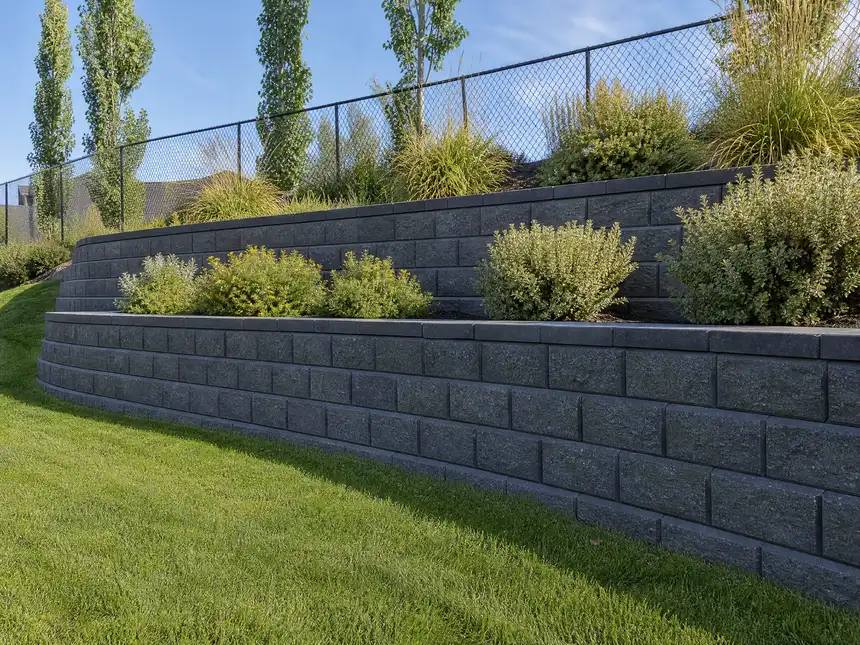
Retaining Walls
Engineered block and boulder retaining walls that hold grade through prairie freeze-thaw.
See what it involves→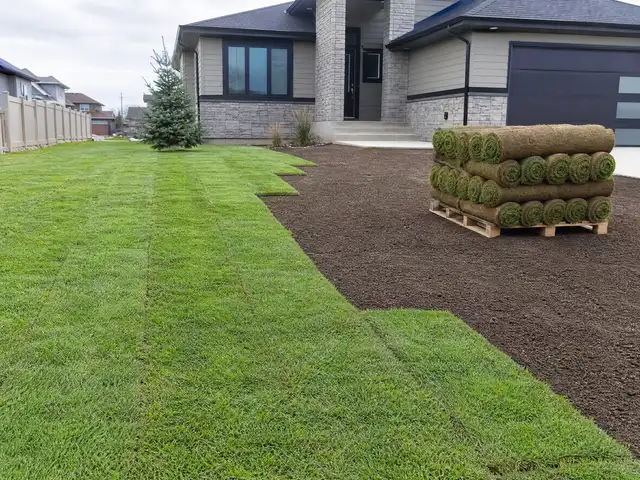
Sod Installation
New sod lawns on properly prepared grade and real topsoil depth, not laid over builder clay.
Late May through September
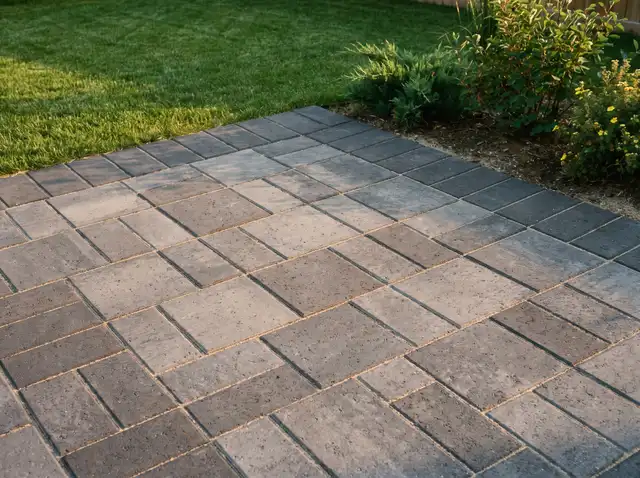
Paving Stones & Patios
Paving stone patios, walkways, and driveways built on a base that handles prairie frost.
May through October

Landscape Design
Full yard plans with prairie-hardy planting, built around how you actually use the space.
Year-round (design); May–October (build)
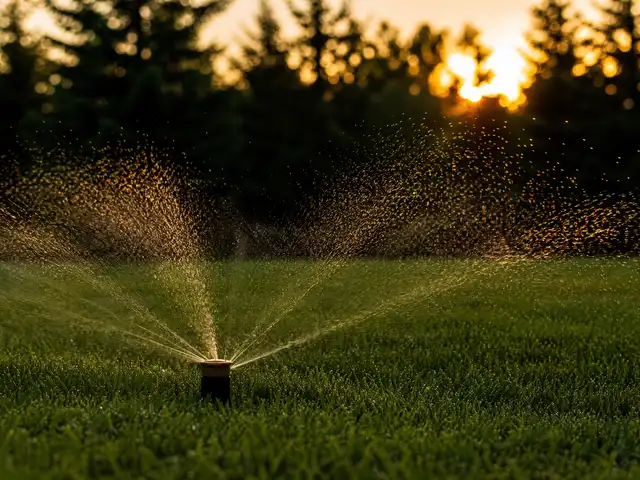
Irrigation & Sprinklers
Sprinkler system design, installation, spring startups, and fall blowouts.
May through October