May through October
Retaining Walls in Saskatoon
Engineered block and boulder retaining walls that hold grade through prairie freeze-thaw.
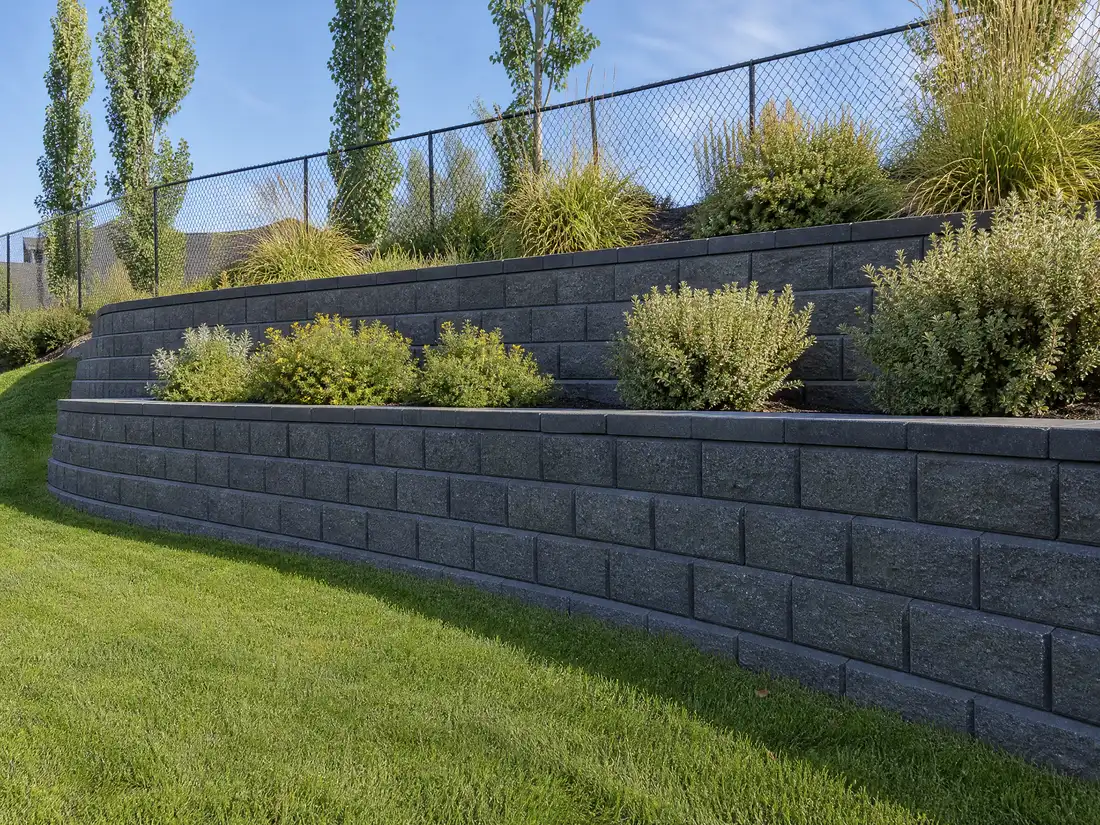
We build block and boulder retaining walls for homeowners in Saskatoon and area, from low garden terraces to structural walls that hold a real grade change. A retaining wall is holding back soil and the water in it, so what keeps it standing through Saskatoon winters is the drainage and the base behind the wall rather than the blocks you can see. Customers come to us with slopes that are eroding, unusable, or pushing soil toward a foundation.
What Goes Into Building a Retaining Wall?
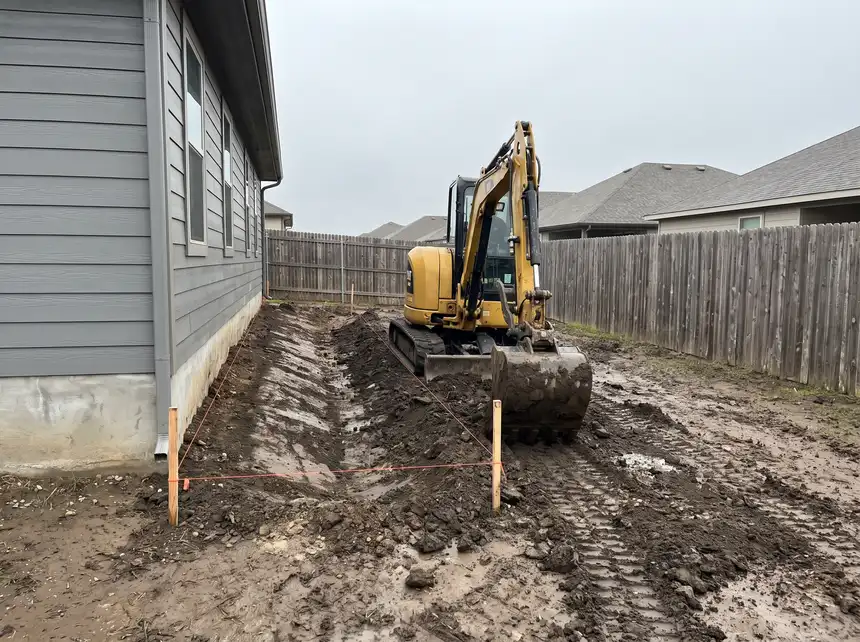
A retaining wall begins below ground. We excavate a trench, install and compact a granular base, and set the first course level and partly buried — the buried course is what anchors the wall, and a wall built directly on grade has nothing holding its base in place.
Each subsequent course is set back slightly so the wall leans into the slope it is holding. Behind the blocks we install free-draining granular backfill and a drainage path that takes water away rather than letting it collect. On taller walls, geogrid is laid back into the retained soil at intervals so the wall and the earth behind it act as one mass.
The wall is finished with capping units and the grade above and below is shaped so surface water is directed away rather than over the top. On Saskatoon clay, which sheds water rather than absorbing it, where the surface water goes is a design decision rather than an afterthought.
When Does a Saskatoon Property Actually Need a Retaining Wall?
The most common reason in Saskatoon is turning an unusable slope into usable yard. A back yard that falls away steeply is space you cannot put a table on, and terracing it with a wall converts it into flat, usable ground. This is most of what we build.
The second is erosion and soil movement. A slope that is losing material every spring melt, dropping soil onto a patio or driveway, or pushing against a fence, is a slope that needs holding. Left alone it keeps moving, and it moves toward whatever is downhill.
The third is protecting a structure. Soil bearing against a foundation, a garage pad, or a driveway edge creates pressure and drainage problems, and a properly drained wall relieves both. Walls in older Saskatoon riverbank neighbourhoods are frequently doing exactly this job.
Why Do Retaining Walls Fail in Saskatoon?
Water is behind almost every retaining wall failure here. Saskatoon clay holds water rather than draining it, and saturated soil is dramatically heavier than dry soil while also exerting hydrostatic pressure directly against the back of the wall. A wall built without drainage behind it is being asked to hold a load it was never designed for, every spring.
Frost compounds it. Water held in the soil behind an undrained wall freezes and expands, pushing the wall outward. Because that happens every year, the movement is cumulative — a wall that leans slightly after three winters leans noticeably after eight. Bulging in the middle courses is the classic signature.
The third cause is building too tall without engineering. There is a height beyond which a gravity wall cannot hold its load without reinforcement, and in Saskatchewan walls above a certain height need engineered design and typically a permit. Walls that fail catastrophically are usually walls that were built a course or two higher than the method allowed.
What Affects the Cost of a Retaining Wall in Saskatoon?
Height is the dominant factor and it is not linear. A wall twice as tall costs far more than twice as much, because the loads increase sharply, the base gets deeper, geogrid reinforcement becomes necessary, and above a threshold engineered drawings and a permit are required.
Length adds material and labour in a straightforward way, but curves, corners, steps, and tiers all add cutting and layout time beyond the raw metre count.
Block selection matters. A basic retaining block and a large architectural unit or natural boulder wall are different price points, and boulder walls in particular need machine access to place stone that cannot be lifted by hand.
Site access and disposal are the practical multipliers. Retaining wall work generates a lot of excavated material, and on a Saskatoon lot where a machine cannot reach the work area, both the spoil out and the granular in move by hand. Drainage requirements — where the water actually goes once it is collected — can add real cost on a tight lot.
Do I Need a Retaining Wall or Just Regrading?
Regrading is the cheaper answer and the right one when the slope is gentle enough to be reshaped into something usable and there is somewhere for the material to go. If a yard falls away modestly, excavation and grading alone can often produce a usable, gently sloped lawn for far less than a wall.
A retaining wall is necessary when the grade change is too abrupt to smooth out, when there is no room to spread the slope because of a property line or a structure, or when you want genuinely flat usable space rather than a gentler slope. Once you need to hold soil vertically, there is no cheaper substitute.
For larger grade changes, tiering two lower walls is frequently better than one tall wall — lower walls avoid engineering thresholds, spread the load, and usually cost less than a single structure of the same total height. The right choice depends on how much horizontal room you have, which is what we work out on site.
Where Does This Fit With the Rest of the Yard?
Retaining Walls is rarely the only thing a property needs, and the order the work happens in matters more on Saskatoon clay than most people expect. Ground comes first: if water is pooling or running toward the house, grading and drainage is the job to do before anything you can see. Buried services like irrigation go in before surfaces, and sod goes down after the hard landscaping rather than before it.
The jobs most often quoted alongside this one are excavation, grading & earthworks, paving stones & patios and landscape design. Doing them in one visit is usually cheaper than bringing equipment back, because the mobilisation and the machine access are paid for once.
If you are planning the whole property rather than one job, start with a landscape design so the phases are sequenced before anything is built. Otherwise, the full service list covers everything we do, the cost guides explain what drives each price here, and the how-to guides are written for Saskatchewan timing rather than the milder-climate advice most search results give you. We work across Saskatoon and the surrounding area, including Warman, and every quote is free and given on site.
Get a free retaining walls quote
Tell us what you need and where the property is. We come out, look at the ground, and give you a written scope and price — no charge and no obligation.
- Free on-site quotes across Saskatoon
- Prairie-hardy plantings that survive zone 3a winters
- Utility locates arranged before any digging
- Summer yard work and winter snow from one contractor
- Written scope before a shovel goes in the ground
Frequently Asked Questions
How much does a retaining wall cost in Saskatoon?
Retaining walls are priced by the square foot of wall face — height times length — rather than by length alone, because height drives the engineering. A low garden terrace is a modest job; a structural wall over a metre tall with geogrid and engineered drawings is a different category of project entirely.
Do I need a permit for a retaining wall in Saskatoon?
Above a certain height a retaining wall requires a permit and engineered design, and the threshold is set by the municipality — the City of Saskatoon, the City of Warman, and the RM of Corman Park each have their own requirements. Low decorative garden walls generally do not. We confirm what applies to your specific wall before starting.
How long do retaining walls last?
A properly drained and correctly built block wall should last decades in Saskatoon, and the blocks themselves effectively do not wear out. Walls that fail early nearly always fail from water behind them, not from the material degrading.
Why is my existing retaining wall leaning?
Almost certainly water pressure behind it. A wall built without free-draining backfill and a drainage path accumulates saturated soil against its back, and freeze-thaw pushes it outward a little more each winter. Leaning is progressive and does not stabilize on its own — it needs to be rebuilt with proper drainage.
Can a leaning wall be repaired, or does it need rebuilding?
If the lean is minor and the base is intact, the upper courses can sometimes be taken down and reset with drainage added behind. If the base has shifted or the wall is bulging through its middle courses, it needs rebuilding — resetting the top of a wall whose base has moved does not fix anything.
What is geogrid and when is it needed?
Geogrid is a structural mesh laid horizontally back into the soil behind the wall at intervals, tying the wall and the retained earth together so they act as a single mass. It becomes necessary above a certain height, and it is one of the things that separates a wall built to last from one built to a price.
Can you build a retaining wall in the fall?
Yes, right up until the ground freezes. The base and drainage work the same in September as in May. What we avoid is building on ground that is already frozen or saturated, since neither compacts properly.
What is the difference between a block wall and a boulder wall?
Block walls use manufactured units that lock together, giving a uniform look and predictable engineering. Boulder walls use natural stone, look more informal, and generally need machine access because the stones are too heavy to place by hand. Both work here; the choice is mostly about appearance and access.
Will a retaining wall fix my drainage problem?
Only if it is designed to. A wall holds soil; it does not automatically move water. A well-designed wall includes drainage that collects water and directs it somewhere useful, and that "somewhere" needs to be part of the plan. A wall that simply blocks the existing water path can make a drainage problem worse.
How close to my property line can I build?
That depends on the municipal bylaw and on where the retained soil and drainage end up, since neither can be discharged onto a neighbour's property. Walls near a property line need care about both the structure and the water, and we sort out the setback requirements before design rather than after.
Related services
Most retaining walls jobs in Saskatoon come with one or two of these attached — it is usually cheaper to do them in the same visit than to bring equipment back.
May through October
Excavation, Grading & Earthworks
Yard grading, earthworks and drainage correction that moves water away from your foundation.
See what it involves→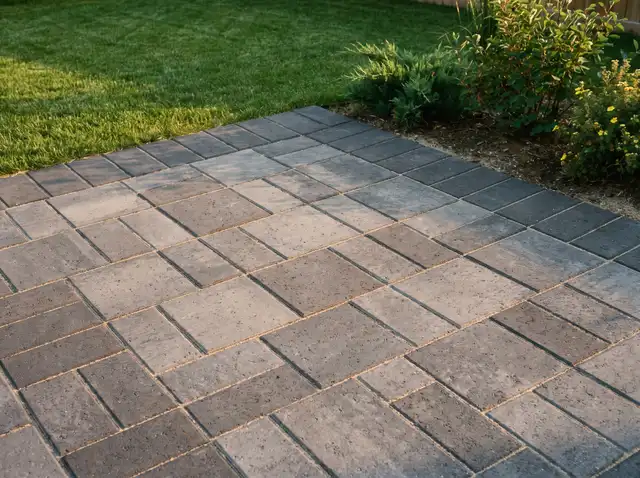
Paving Stones & Patios
Paving stone patios, walkways, and driveways built on a base that handles prairie frost.
May through October
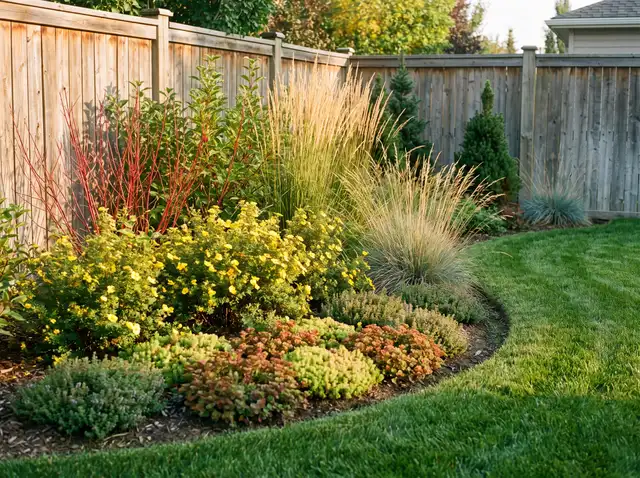
Landscape Design
Full yard plans with prairie-hardy planting, built around how you actually use the space.
Year-round (design); May–October (build)
Sod Installation
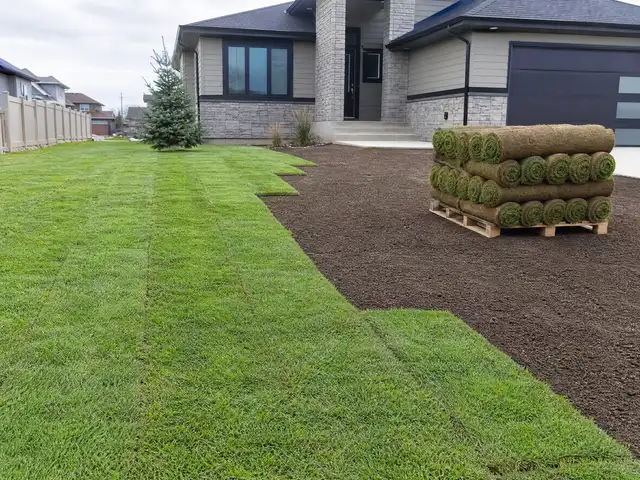
New sod lawns on properly prepared grade and real topsoil depth, not laid over builder clay.
Late May through September
Deck Building
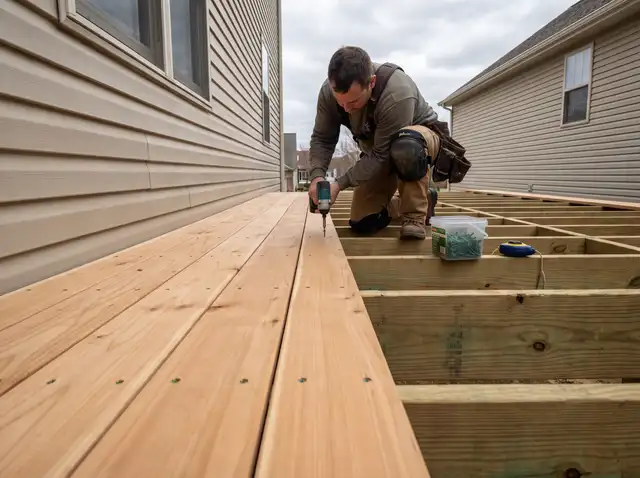
Cedar and composite decks built on footings that go below prairie frost line.
May through October