May through October
Deck Building in Saskatoon
Cedar and composite decks built on footings that go below prairie frost line.
We design and build residential decks in Saskatoon and the surrounding communities, from ground-level platforms to raised walkout decks with stairs and railings. In Saskatchewan every deck lives or dies on its footings, because a structure sitting on anything shallower than the frost line will lift and rack every winter until it is unusable. Homeowners hire us for a deck that is still level and solid in its tenth year, built to permit and inspected.
What Is Involved in Building a Deck in Saskatoon?
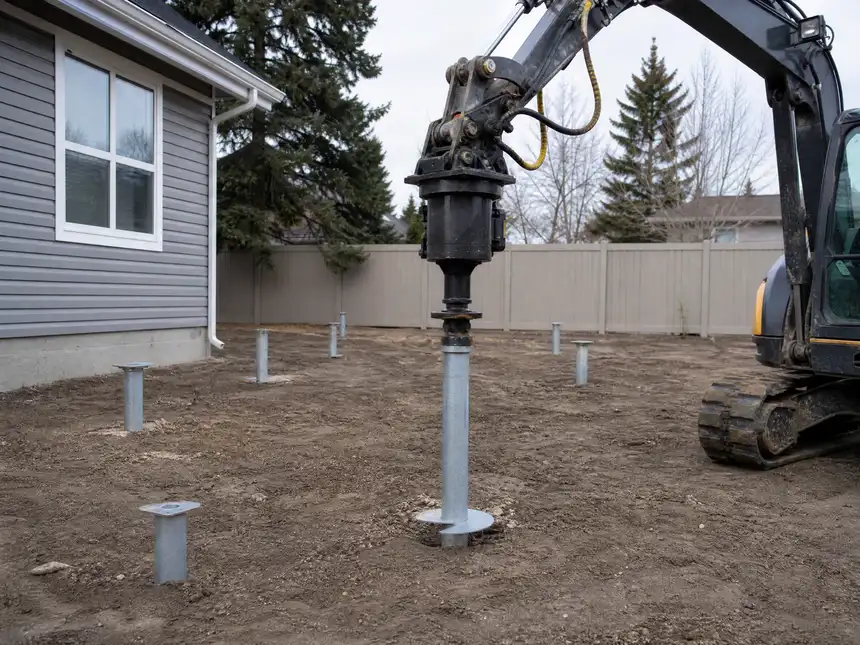
A Saskatoon deck starts with permits and footings, not with lumber. We confirm what the City of Saskatoon requires for the size and height you want, then get the footings below the local frost depth — either poured concrete or, more commonly here, helical screw piles turned down past the frost line. This is the step that determines whether the deck stays put, and it is the step that is invisible once the boards are down.
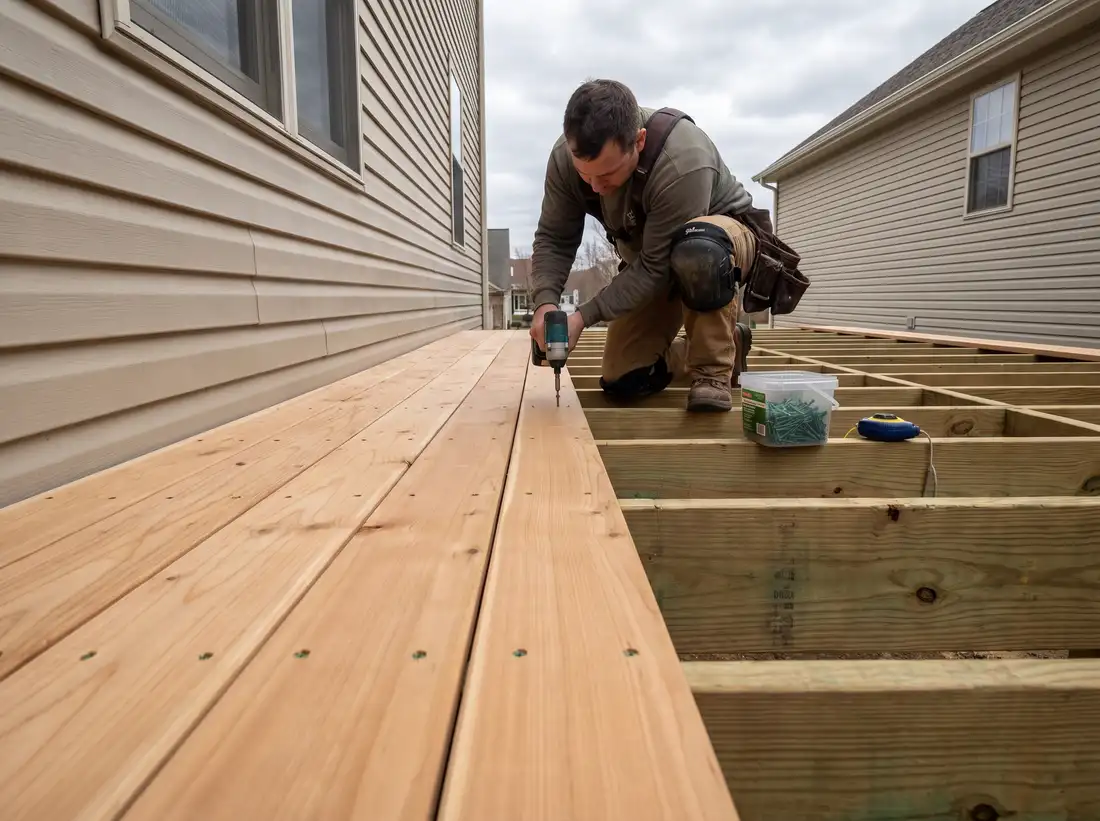
The frame goes on next — beams, joists, ledger connection to the house where applicable, and blocking. The ledger attachment is the detail that matters most for safety on a raised deck, because a ledger fastened badly is the failure mode that actually injures people, and it has to be flashed so water is not driven into the house wall behind it.
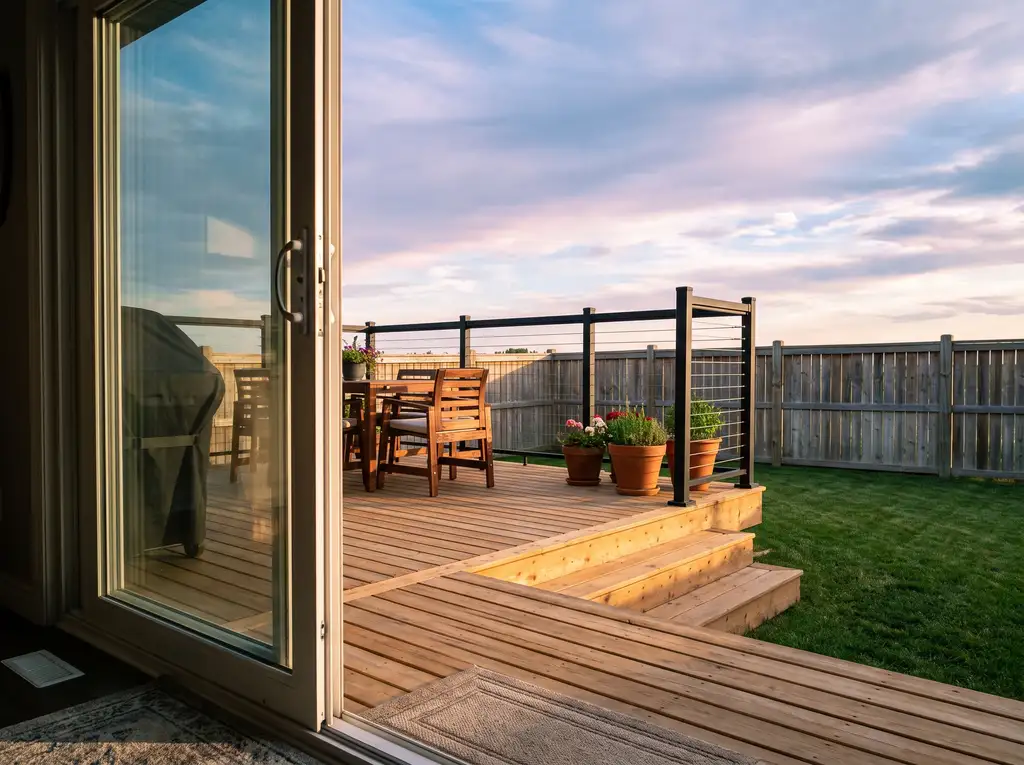
Then decking, stairs, and railing. Railing height and stair geometry are code items rather than style choices, and on a raised Saskatoon deck they will be inspected. We finish with the trim and skirting that keep the underside from becoming a place snow and leaves collect.
When Does a Deck Make More Sense Than a Patio?
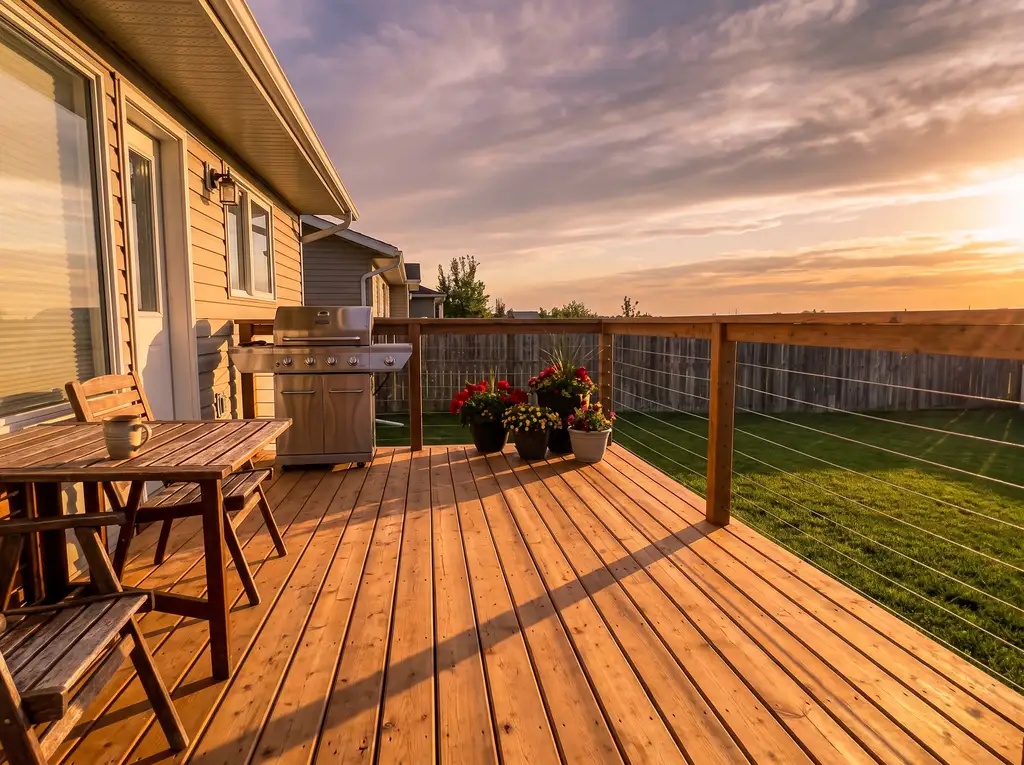
A deck is the answer whenever the usable surface needs to be up off the ground. A Saskatoon house with a walkout door at basement-ceiling height needs a deck to get from that door to the yard, and no amount of paving stone solves that without a great deal of fill and a retaining wall.
Sloped yards favour decks for the same reason. Levelling a significant slope to build a patio means moving earth and holding it back; framing a deck over the slope leaves the ground where it is. On a genuinely sloped Saskatoon lot the deck is often both cheaper and better.
Decks also win when you want the space fast and dry. A deck sheds water and dries quickly after a prairie rain, and it does not hold meltwater the way a low patio in a poorly graded yard does. Where the ground is already flat, well drained, and at door level, a paving stone patio is usually the longer-lived choice.
Why Do Decks Fail or Move in Saskatchewan?
Shallow footings are the dominant failure in this climate. Saskatoon frost drives deep, and a deck on footings that stop above that depth is lifted by frost every winter and dropped again every spring. After several cycles the structure racks — doors bind, stairs pull away from the deck, and the whole thing feels loose. This cannot be repaired by tightening fasteners; the footings have to be redone, which is one of the main reasons screw piles have become the default here.
Poor ledger attachment and flashing is the second, and it is the dangerous one. A ledger fastened with the wrong hardware, or without flashing above it, either pulls away from the house under load or drives water into the wall sheathing where it rots quietly for years before anyone notices.
Material failure is the third and the slowest. Untreated or poorly maintained wood in contact with the ground rots, fasteners that are not rated for treated lumber corrode, and cheap composite decking in full prairie sun fades and gets brittle. None of these is dramatic, but they shorten the life of a deck considerably.
What Affects the Cost of a Deck in Saskatoon?
Size sets the baseline, but height changes the number faster than area does. A ground-level deck needs no railing and minimal stairs; a raised walkout deck needs railing on every open side, a full staircase, larger beams, and more footings, and it is a permit and inspection job.
Material choice is the biggest single lever you control. Pressure-treated framing under pressure-treated decking is the economical build; cedar costs more and looks and weathers better; composite costs the most up front and eliminates the annual staining. Over a twenty-year horizon in Saskatoon sun the gap narrows considerably.
Footings scale with the structure. Deeper and more numerous footings on a raised deck mean more digging, more concrete, and more time, and difficult access for a machine means hand digging in clay.
Complexity adds real cost: multiple levels, angles, built-in benches or planters, privacy screening, and lighting. Permit fees and inspection are a modest but real line item on a Saskatoon deck.
Should I Build in Cedar, Composite, or Pressure-Treated?
Pressure-treated is the right choice when the budget is the constraint. It is structurally sound, it is what most Saskatoon deck framing is built from regardless of the surface, and treated decking will serve for years. The cost is ongoing maintenance — it needs cleaning and staining regularly, and in this climate it will check and grey if it is not maintained.
Cedar is the choice when you want the look and feel of real wood and are prepared to maintain it. It is more stable and more attractive than treated lumber and it is pleasant underfoot, but it is not maintenance-free — an unmaintained cedar deck in Saskatoon sun greys within a couple of seasons.
Composite is the choice when you do not want to maintain a deck at all. It costs the most up front and it never needs staining. Two honest caveats for Saskatoon: it gets noticeably hotter than wood in full summer sun, and the cheap end of the composite market does not hold up to prairie UV and freeze-thaw — buy a good one or buy cedar instead.
Where Does This Fit With the Rest of the Yard?
Deck Building is rarely the only thing a property needs, and the order the work happens in matters more on Saskatoon clay than most people expect. Ground comes first: if water is pooling or running toward the house, grading and drainage is the job to do before anything you can see. Buried services like irrigation go in before surfaces, and sod goes down after the hard landscaping rather than before it.
The jobs most often quoted alongside this one are screw piles, fence installation and paving stones & patios. Doing them in one visit is usually cheaper than bringing equipment back, because the mobilisation and the machine access are paid for once.
If you are planning the whole property rather than one job, start with a landscape design so the phases are sequenced before anything is built. Otherwise, the full service list covers everything we do, the cost guides explain what drives each price here, and the how-to guides are written for Saskatchewan timing rather than the milder-climate advice most search results give you. We work across Saskatoon and the surrounding area, including Warman, and every quote is free and given on site.
Get a free deck building quote
Tell us what you need and where the property is. We come out, look at the ground, and give you a written scope and price — no charge and no obligation.
- Free on-site quotes across Saskatoon
- Prairie-hardy plantings that survive zone 3a winters
- Utility locates arranged before any digging
- Summer yard work and winter snow from one contractor
- Written scope before a shovel goes in the ground
Frequently Asked Questions
Do I need a permit to build a deck in Saskatoon?
Usually yes. The City of Saskatoon requires a building permit for decks above a certain height and size, and permitted decks are inspected. Low ground-level platforms may fall below the threshold. We confirm what applies to your specific design and handle the permit as part of the job rather than leaving it with you.
How deep do deck footings need to go in Saskatoon?
Below the local frost line, which on the prairies is deep — considerably deeper than people expect from watching build videos made in milder climates. This is the single most important detail in a Saskatchewan deck. Footings that stop short will heave every winter, and the only fix is doing them again properly.
Should I use screw piles or poured concrete footings?
Screw piles are the more common choice for Saskatoon decks now. They can be installed where a concrete truck cannot reach, they need no cure time so framing starts the same day, they produce no excavation spoil, and their capacity is measured by installation torque rather than assumed. Poured concrete is still perfectly sound where the site is open and easy — the failures here come from footings that were not taken deep enough, not from the material.
How much does a deck cost in Saskatoon?
Decks are priced by the square foot and the range is wide, driven mostly by height and material. A ground-level treated deck is at the bottom; a raised composite walkout deck with stairs, railings, and skirting is several times that. Height matters more than area because it brings railings, stairs, and bigger structure with it.
When is the best time to build a deck in Saskatoon?
From May through October, once footings can be dug. Spring books up first because everyone wants the deck for summer, so a late-summer or fall build usually means a shorter wait and the same result. Footings cannot be dug once the ground is frozen.
How long does a deck take to build?
A straightforward residential deck is generally a week or two of work depending on size and complexity, plus the permit timeline before it and the inspection within it. Multi-level decks and anything with significant railing and stair work take longer.
How often does a wood deck need staining in Saskatoon?
Every two to three years for most treated and cedar decks, and the south-facing surfaces will need it before the shaded ones. Prairie UV and the freeze-thaw cycle are hard on finishes. A deck that goes five years without attention will need sanding before it can be refinished.
Does composite decking get too hot in the summer?
It gets meaningfully hotter than wood in direct sun, and on a hot Saskatoon afternoon a dark composite deck can be uncomfortable barefoot. Lighter colours help. If the deck is in full south-facing sun and will be used barefoot, that is worth weighing against the maintenance saving.
Can you build a deck around an existing tree or hot tub?
Yes to both, with planning. A tree needs room to grow and move, so the framing is built with clearance rather than tight to the trunk. A hot tub needs the structure engineered for its filled weight from the start — retrofitting a deck to carry one afterwards is a much bigger job than building for it.
Can you repair or extend an existing deck?
Often, yes, and we always look at the footings first. Replacing surface boards and railings on a structurally sound deck is straightforward and good value. If the footings are shallow and the deck has already started to move, repairs on top of that are money spent on a structure that will keep shifting.
What do you do about snow on a deck in winter?
Decks are designed to carry a prairie snow load, so it does not need clearing for structural reasons. Clear it if you use the deck, using a plastic shovel and working parallel to the boards. Avoid salt and standard ice melt on wood and composite alike — both damage the surface over time.
Related services
Most deck building jobs in Saskatoon come with one or two of these attached — it is usually cheaper to do them in the same visit than to bring equipment back.
Year-round
Screw Piles
Helical screw piles for decks, fences and additions — set to depth in a day, no concrete cure.
See what it involves→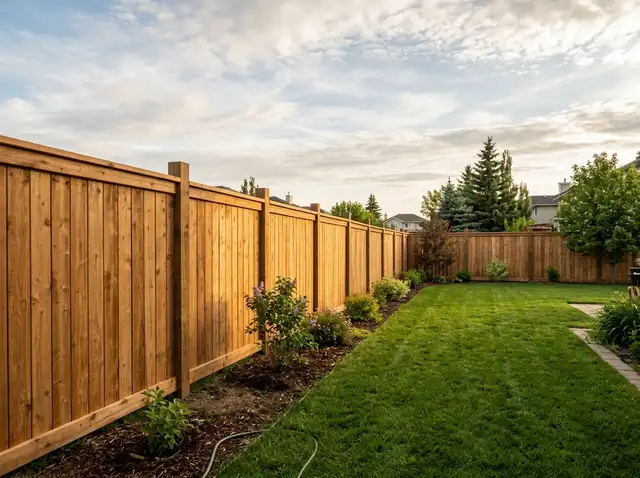
Fence Installation
Wood, vinyl, and chain link fencing set on posts deep enough not to heave.
May through October
Paving Stones & Patios
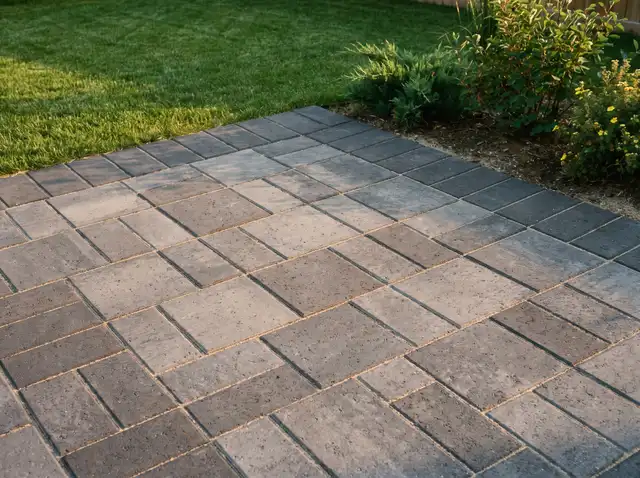
Paving stone patios, walkways, and driveways built on a base that handles prairie frost.
May through October

Landscape Design
Full yard plans with prairie-hardy planting, built around how you actually use the space.
Year-round (design); May–October (build)
Retaining Walls
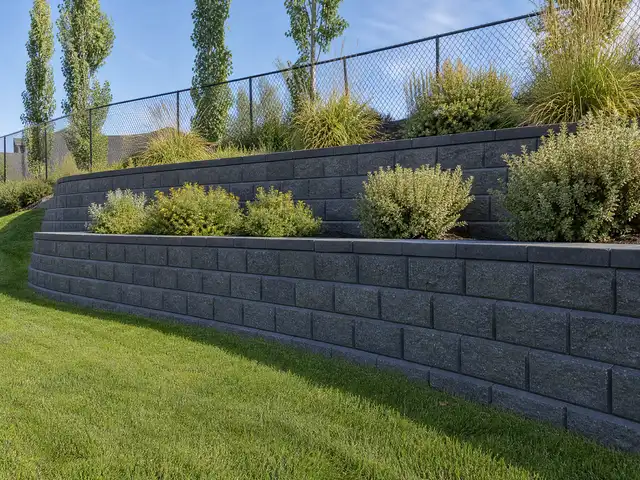
Engineered block and boulder retaining walls that hold grade through prairie freeze-thaw.
May through October